Industrial CCTV installation.

Industrial CCTV for factories, warehouses and industrial yards. Nualux II installs the complete system: power supply, cable trays, cabling, cameras and recording.

From cabling to cameras, by the same team.

An industrial CCTV installation brings cameras, recording and cabling into a plant that already has its own power network and cable routes.

The Nualux team defines the routes and installs the power supplies, cable trays and network cabling, mounts the cameras and configures recording. Afterwards, the cameras, power supplies and cabling are checked during the electrical maintenance visits to the rest of the plant.

Technician adjusting a CCTV camera in an industrial yard

Where CCTV goes in a plant.

Each area has different light, dust, humidity and mounting height conditions. Camera type and protective housing are chosen area by area.

CCTV camera on a pole next to a factory gate

Perimeter and gates

Fences, gates and vehicle access points, with outdoor cameras, infrared illumination and dedicated poles.

Warehouse loading bays with cameras

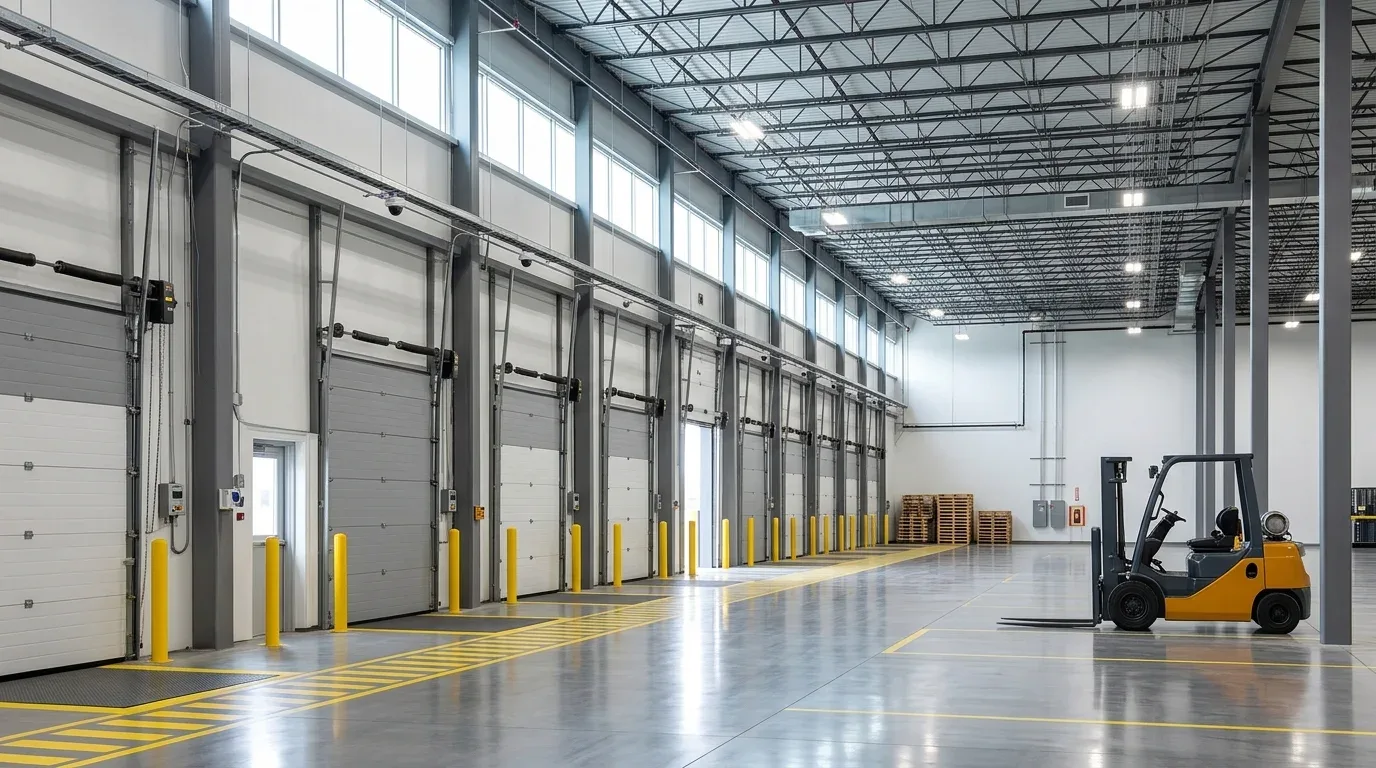
Loading bays and warehouse

Loading docks, forklift aisles and rack ends, with cameras mounted at height covering every dock door.

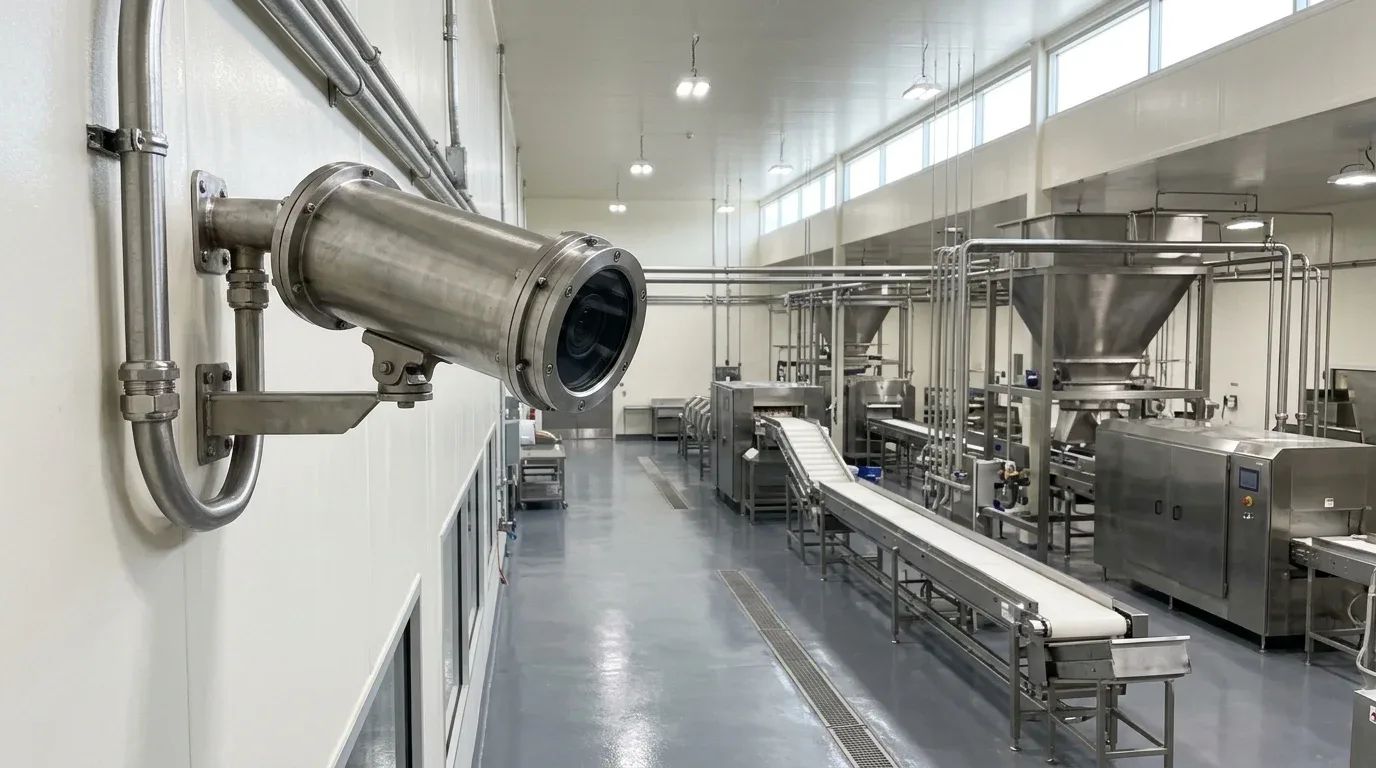
Industrial camera in a production hall

Production halls

Production lines and washdown areas, with sealed, corrosion-resistant protective housings.

Changing rooms, rest areas and other private areas are always kept out of the cameras’ field of view.

What the work includes.

Cabinet with power supplies and a switch for CCTV

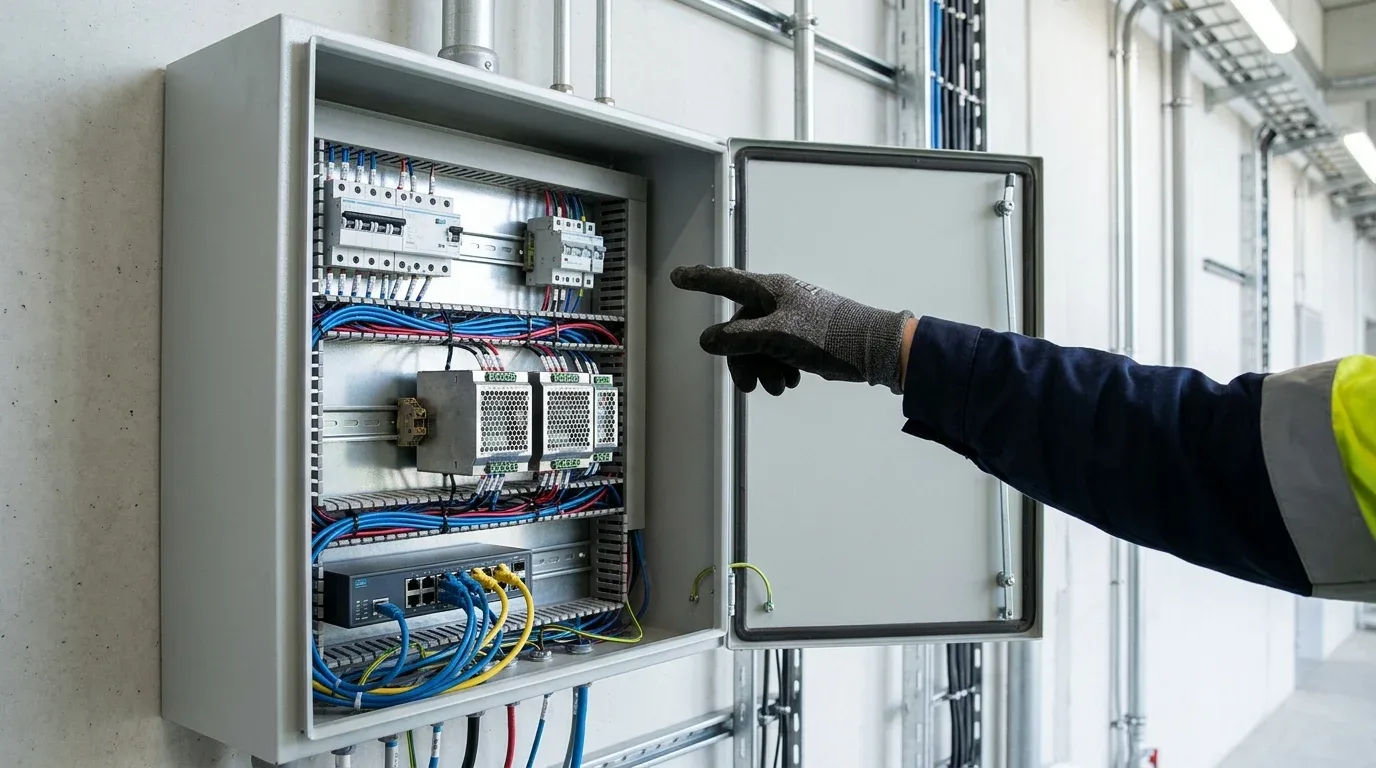
System power supply

Dedicated circuits, protection devices and power supplies for cameras and recorders, fed from the existing panels.

Cable trays in an industrial hall

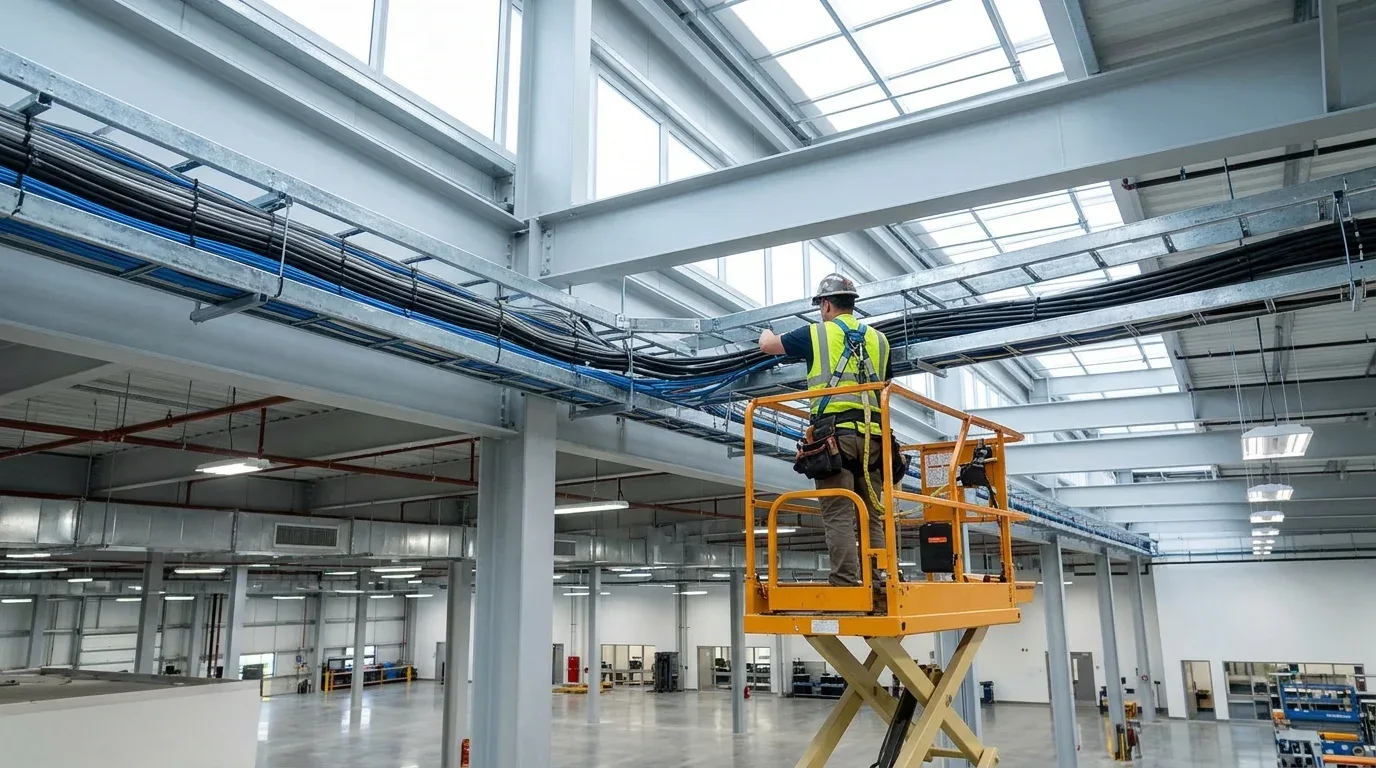
Cable trays

Trays, conduit and junction boxes with a suitable IP rating, along production halls, warehouses and outdoor yards.

Network rack with cabling for the CCTV system

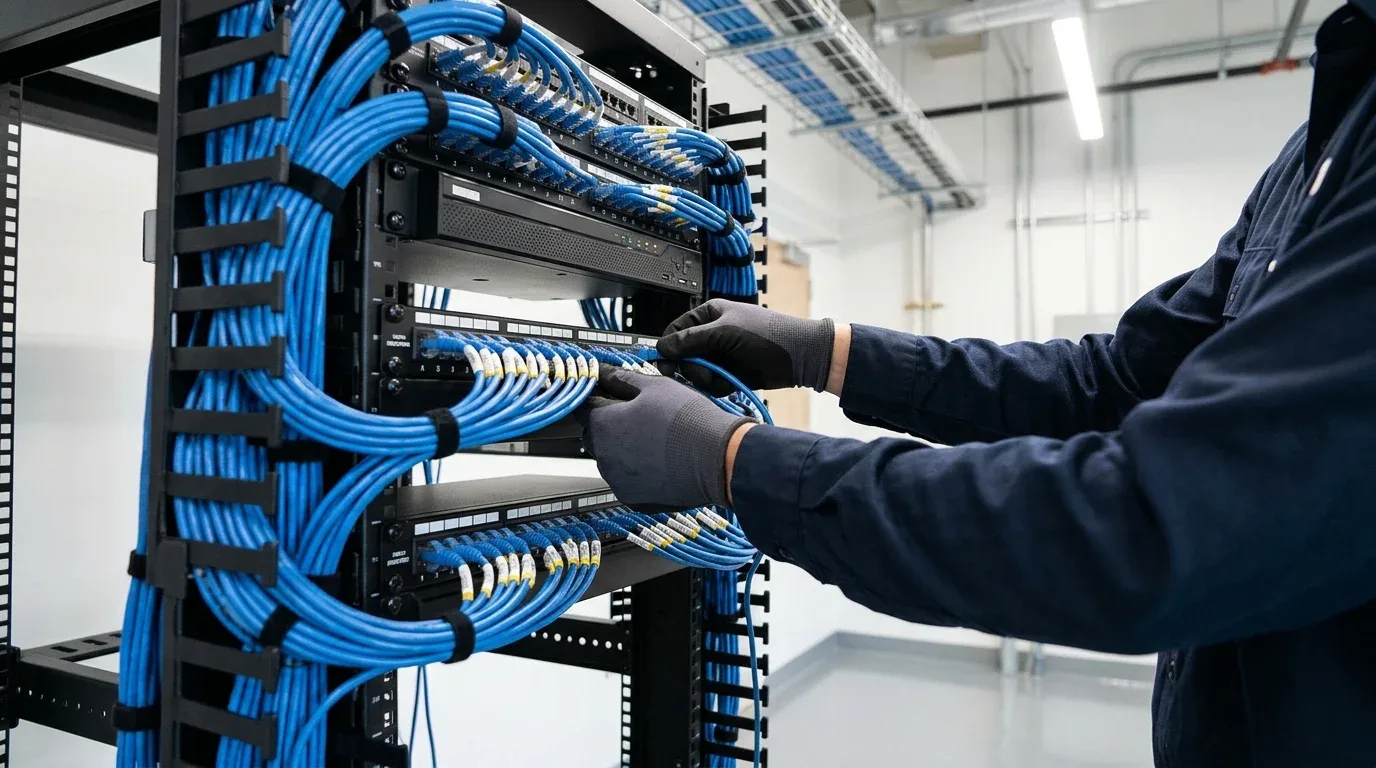
Network cabling

Shielded data cables run from the recorder or server rack to every camera point.

Technicians reviewing the camera layout plan

Installation and configuration

Camera mounting, recorder and storage configuration, and adjustment of each viewing angle.

Camera in a sealed housing in a washdown area

Cameras suited to the environment

Mounting points and protective housings chosen for dust, washdown, outdoor use and low light.

Checking a camera junction box

Checks during maintenance

Power supplies, cabling and enclosures checked during the plant’s electrical maintenance visits.

What the law says about a CCTV system.

In a workplace, CCTV may only be used to protect people and property. Portuguese law limits where cameras can point and how long images are kept.

Legal framework: Law no. 58/2019 (article 19), Portuguese Labour Code (articles 20 and 21) and Law no. 34/2013 (article 31).

The system is planned with these rules from the start

Camera locations are agreed with the client before the first cable is pulled, so none faces private areas or the public road.

CCTV project.

  1. Plan review

    The team reviews the site drawings, the areas to cover and the site conditions, and defines the camera locations with the client.

  2. Cable trays and cabling

    The team installs the cable trays, pulls the power and data cables and mounts the power supplies in the production and warehouse areas.

  3. Camera installation

    The team mounts the cameras, configures recording and storage and adjusts each viewing angle.

  4. Handover

    The system is added to the installation's technical documentation, with the electrical test results and the configuration data for the cameras and recorder.

Request a quote

What you receive at the end of the project.

The project ends with project documents that support maintenance and any request for information.

Plan with the camera points

Location of each camera, its field of view and the cable route to the recorder.

Electrical test record

Continuity, insulation and earthing of the power circuits measured.

System documentation

Power and network diagrams, equipment list and system configuration data.

Warehouse loading bays with cameras

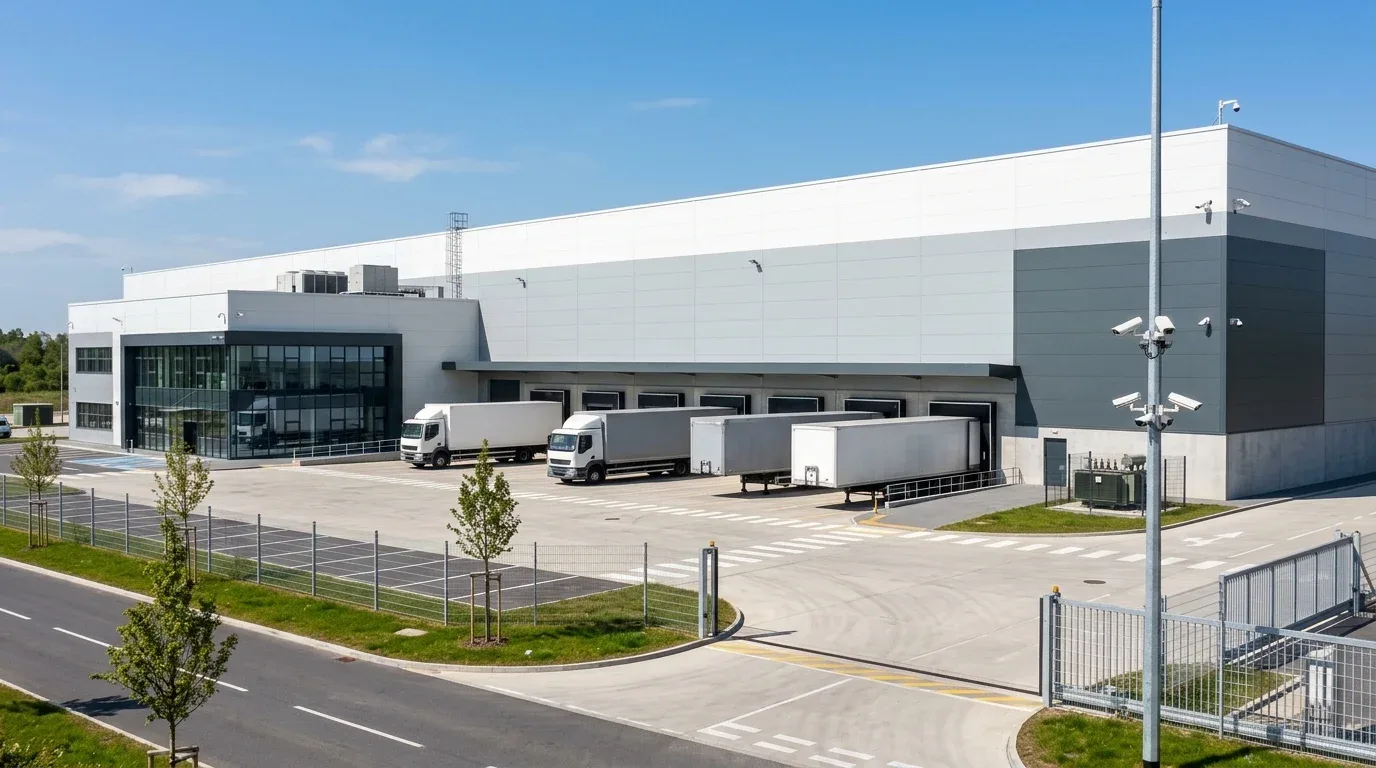
CCTV in a warehouse with loading bays.

Request a quote.

Make your first contact here for a quote. No obligation.

Questions about industrial CCTV

The right camera is the one rated for the environment it will work in. Dusty or humid areas call for sealed housings with a high IP rating, washdown areas need corrosion-resistant housings, and outdoor yards or poorly lit warehouses need infrared and backlight compensation (WDR).

Typically loading bays, gates and perimeter, forklift aisles, rack ends and order picking and dispatch areas. Cameras must not cover private areas such as changing rooms and rest areas.

The rule followed in Portugal is to keep images for 30 days and delete them within the following 48 hours, unless specific legislation or ongoing criminal proceedings apply. The retention period is set in the recorder during installation.

No. In the workplace, CCTV may only be used to protect people and property. Images cannot be used to assess employees’ professional performance.

A company competent in both electrical work and electronic security. Nualux does both: power supply, cable trays, cabling, cameras and recording, with one team and one person responsible for the job.

Yes. Monitored areas must have visible signs informing people that the system exists and what it is for, under article 31 of Portuguese Law no. 34/2013.

It depends on the number of cameras, cable distances, working height, the IP rating required and the recording period. Send Nualux the site plan for a quote.

Yes. Nualux checks the system’s cameras, power supplies, cabling and enclosures during regular electrical maintenance visits, and repairs faults in the cameras and the recording system.