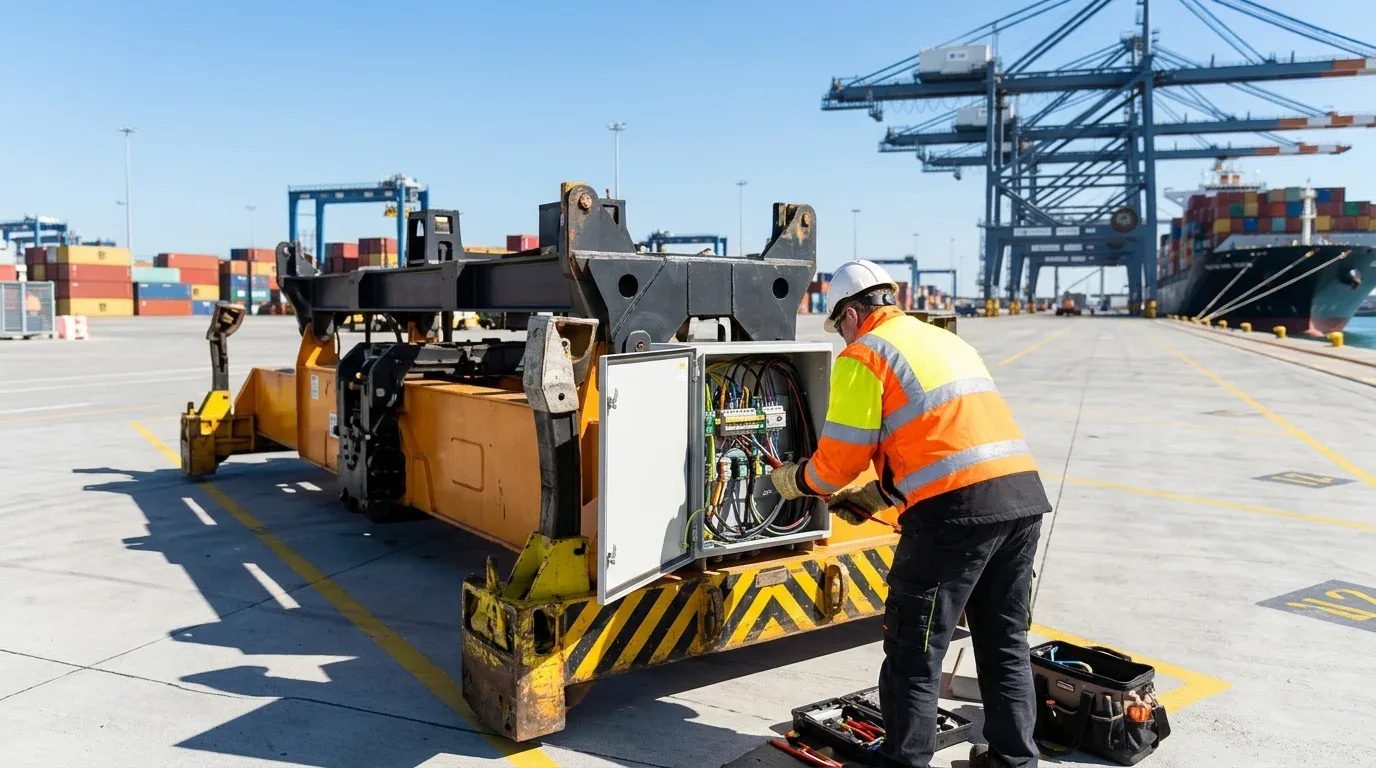
Electrical and automation maintenance on ship-to-shore (STS) and RTG cranes, at container terminals in Portugal and Spain, planned around the vessel schedule.
On the electrical side, container crane maintenance keeps the variable speed drives, control systems, cabling and protection devices of ship-to-shore (STS) and rubber-tyred gantry (RTG) cranes running.
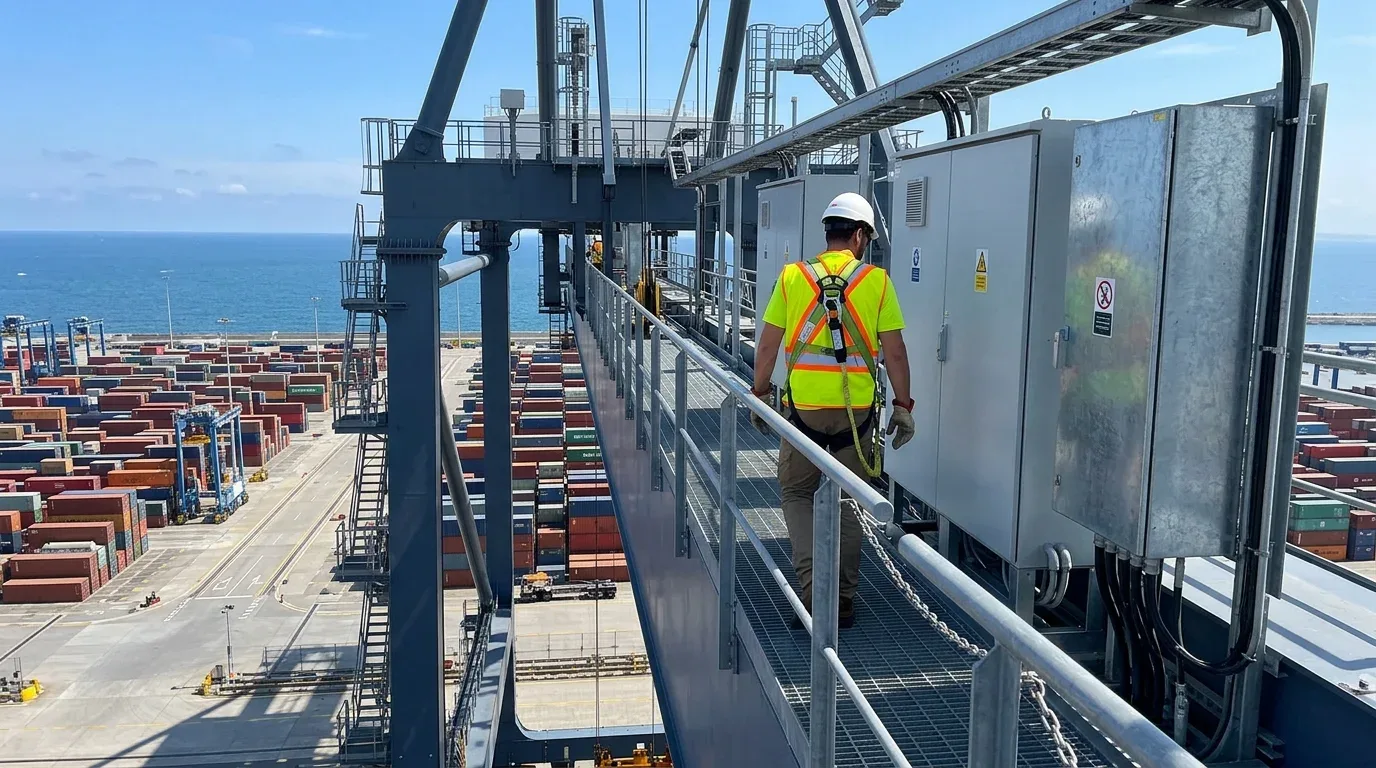
Salt air oxidises contacts and enclosures, and much of the work is done at height. The crane is only available in the windows between vessel calls, so every intervention is agreed with the terminal in advance.
On a container crane, the electrical equipment is spread across three areas, each with its own wear and working conditions.
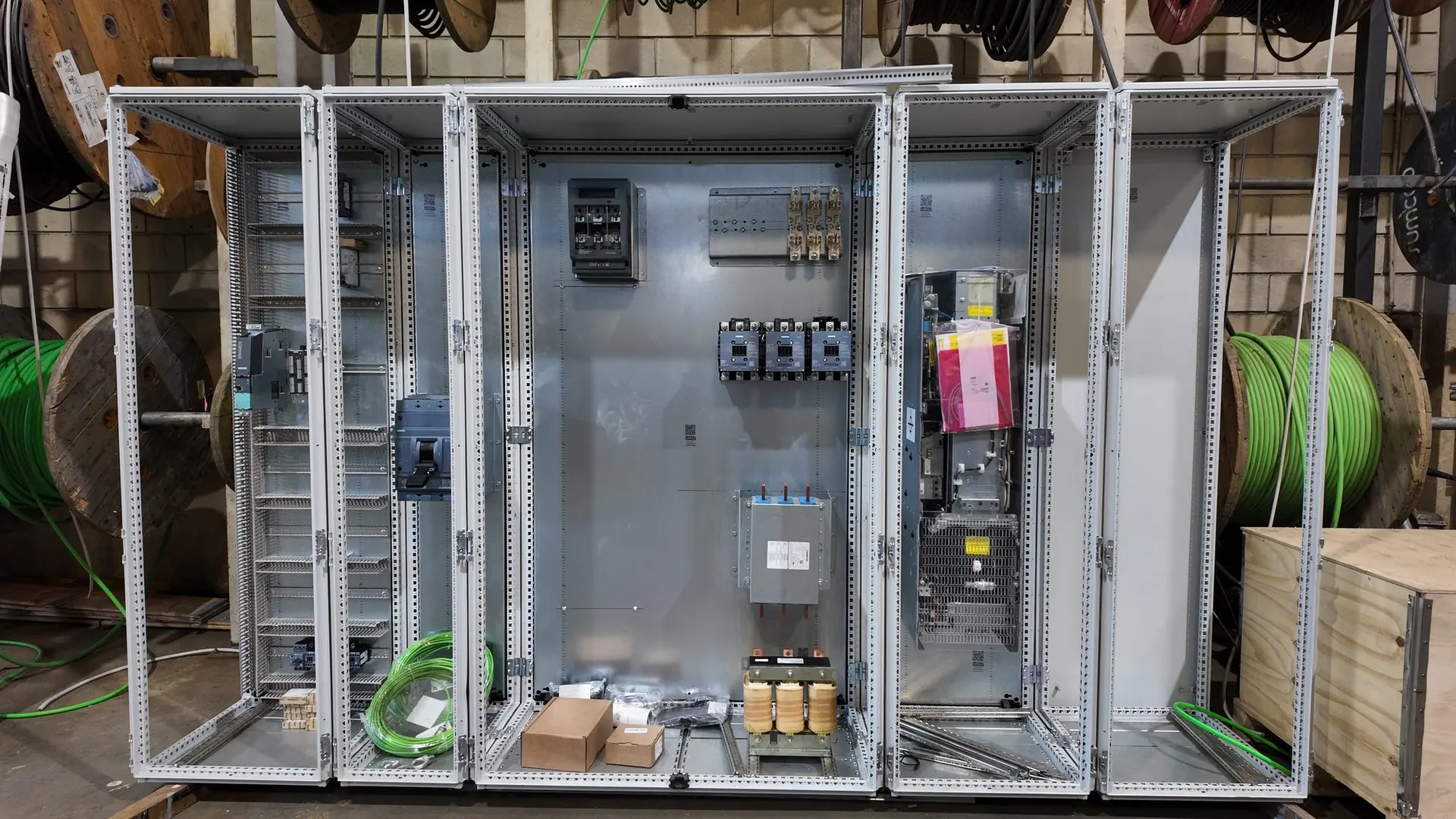
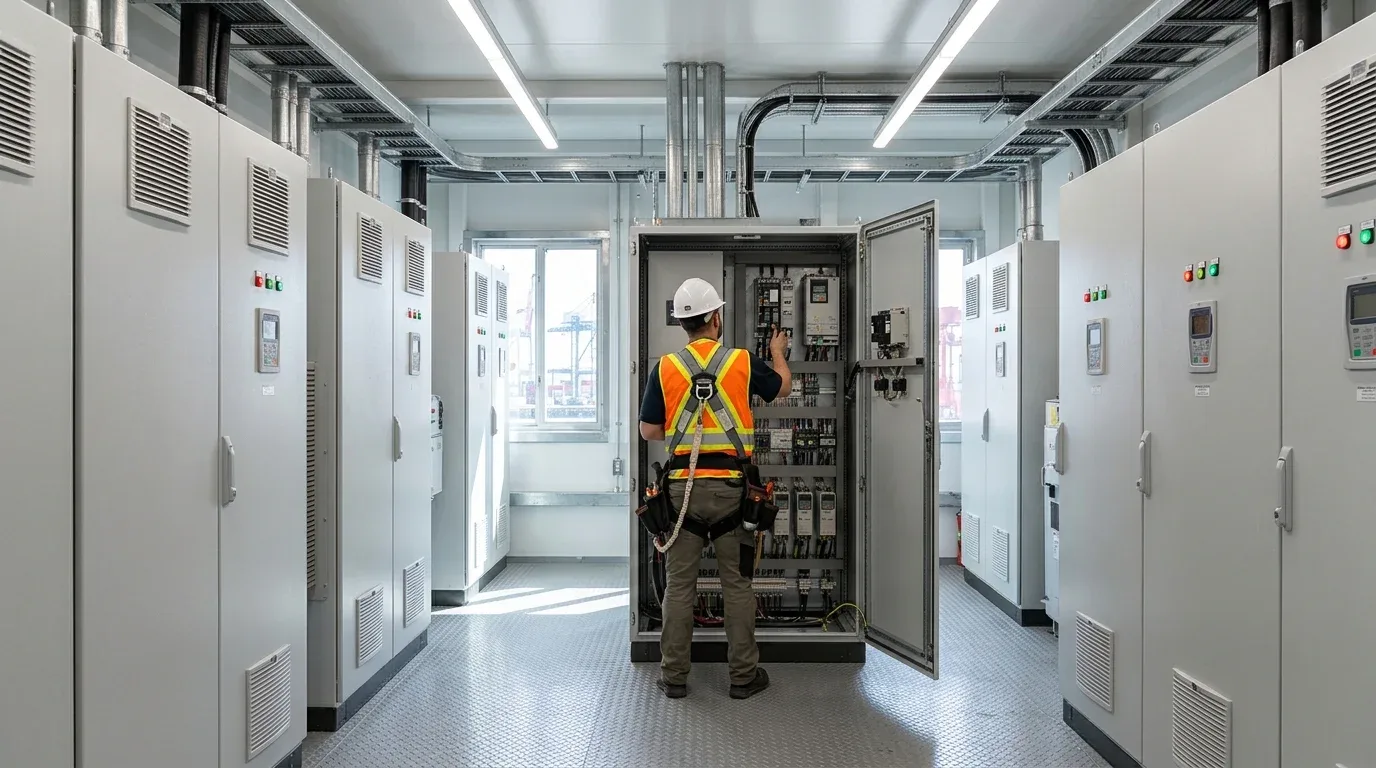
Variable speed drives, PLCs, contactors and relays that control hoist, trolley and gantry travel. This is where fault diagnosis takes place.
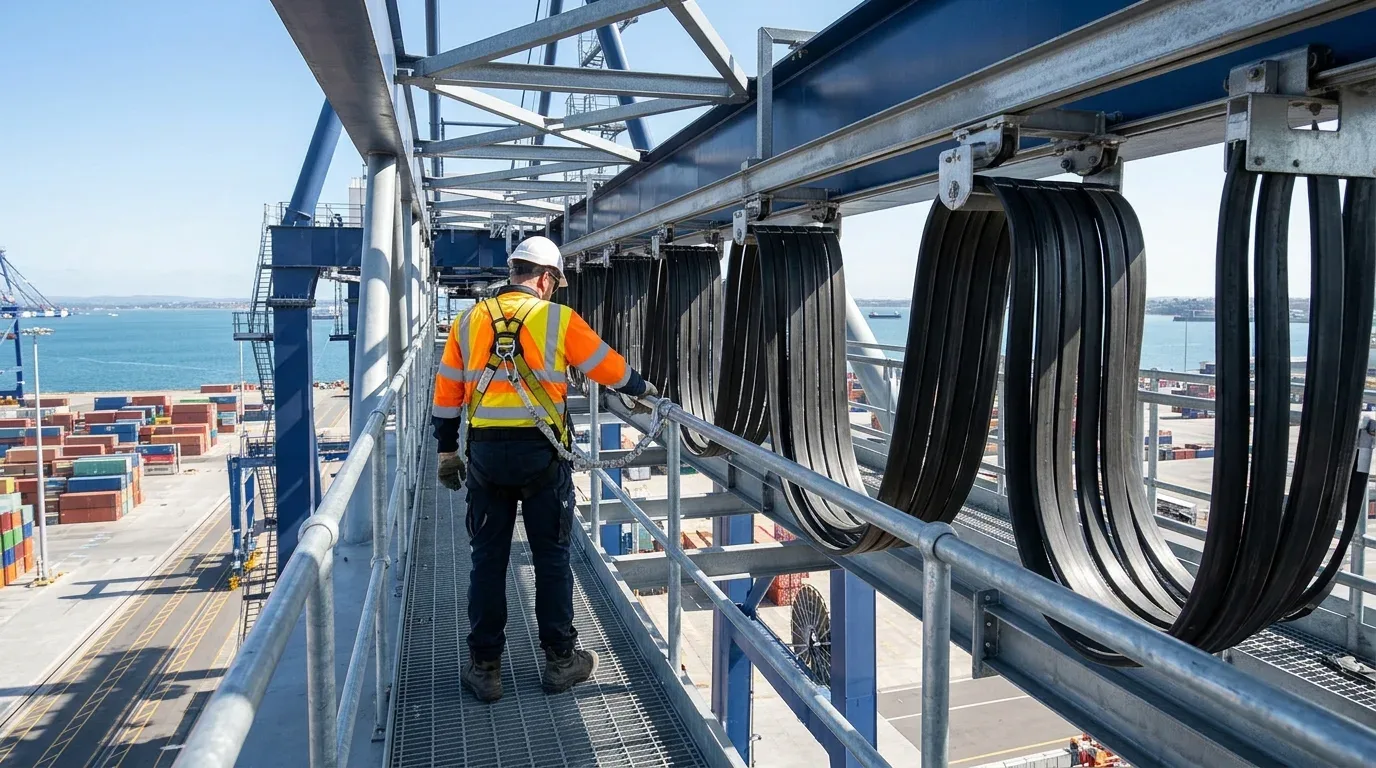
Festoon cables, control boxes and spreader circuits, subject to constant movement, vibration and salt spray.
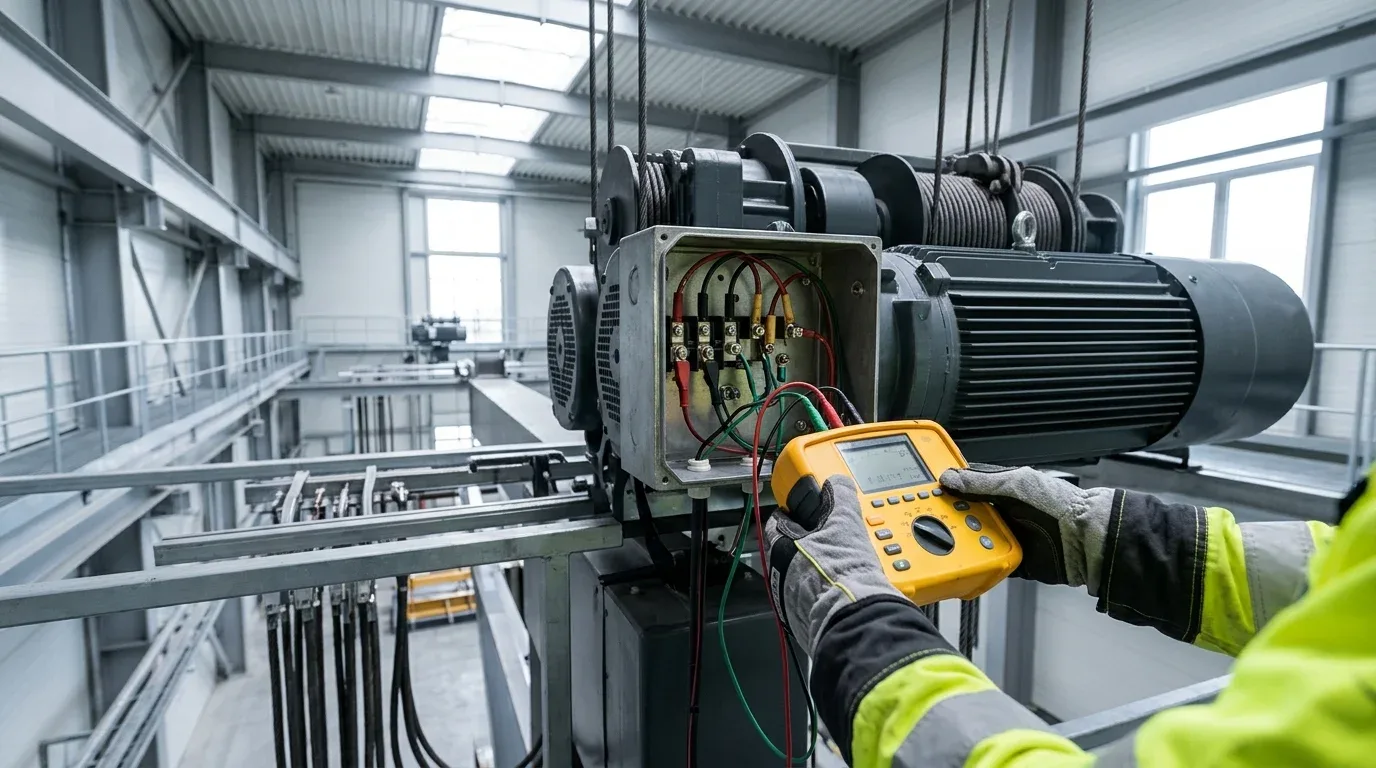
Travel motors and cable reels along the quay or yard, and the power cabling running down the gantry.
The work is always done with the crane isolated and the rest of the quay in operation.
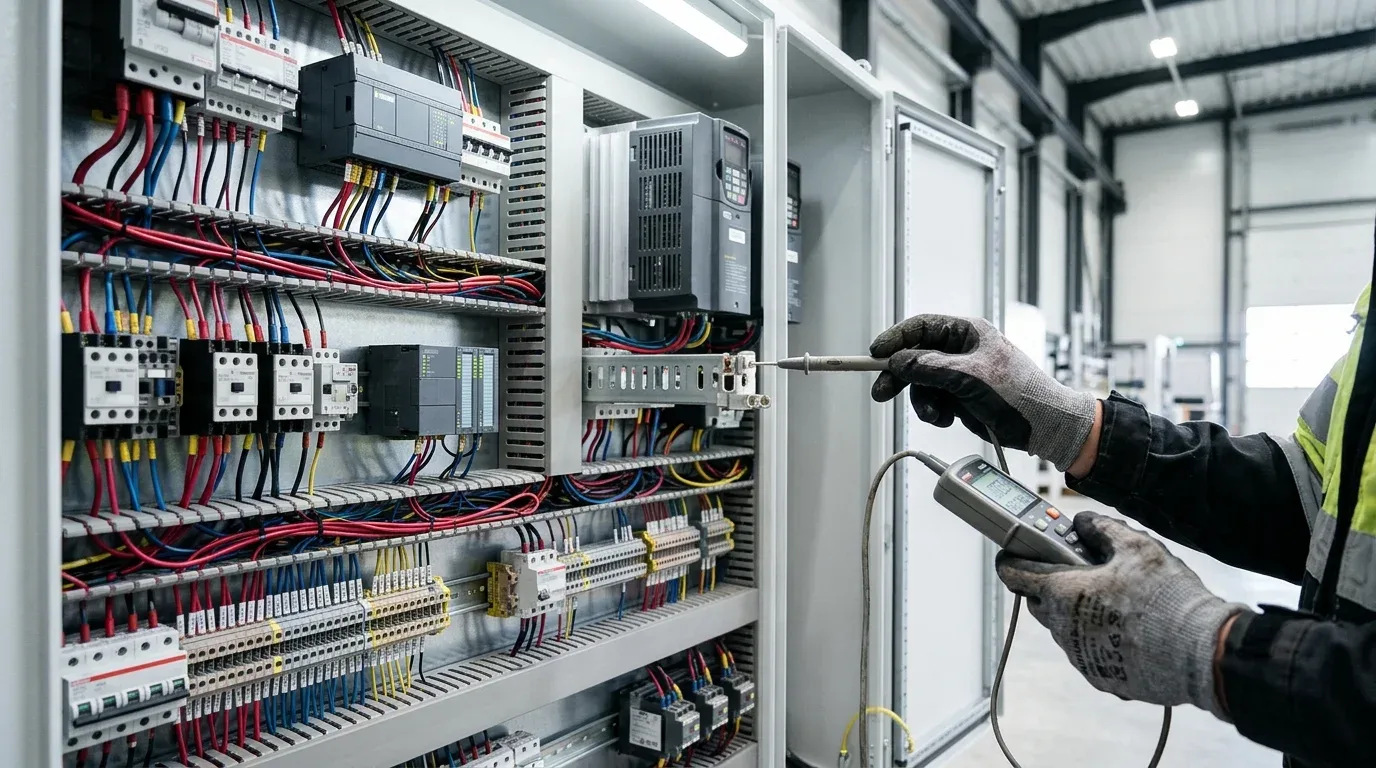
Inspection and overhaul of variable speed drives, contactors, relays and PLCs in the machinery house.
Measurement of insulation resistance, continuity, earth resistance and loop impedance with the HT Fulltest3.
Checks on power and signal cables, junction boxes and cable trolleys along the boom and gantry.
Overhaul of connections, interlocks and control boxes subject to movement, vibration and salt spray.
Cabinet cleaning, replacement of degraded seals and restoring the IP rating of exposed boxes.
Tracing wiring faults and replacing failed components to return the crane to service.
A container crane is work equipment. Portuguese Decree-Law no. 50/2005 requires the terminal operator to carry out regular checks, done by competent people and recorded in writing.
Legal framework: Decree-Law no. 50/2005, articles 6 and 7, on the inspection of work equipment.
Each intervention comes with a report of the measured values, the faults found and the work done.
The team reviews the electrical diagrams and the fault log and agrees the work list with the terminal before travelling.
The work is scheduled for the window between vessel calls set by terminal operations.
The crane is isolated while the rest of the quay keeps operating. The team replaces components and remakes terminations at height and in the machinery house.
Measurements are taken and the crane returns to service with a report of every recorded value.


Each intervention ends with documents for the terminal and the crane manufacturer.
Motor and cable insulation, continuity, earth resistance and loop impedance measured.
Corrosion, worn seals, contactors at the end of their life and other faults, with their correction priority.
Components replaced and terminations remade, by crane area.
Electrical work that Nualux II carries out under equally demanding conditions.
Make your first contact here for a quote. No obligation.
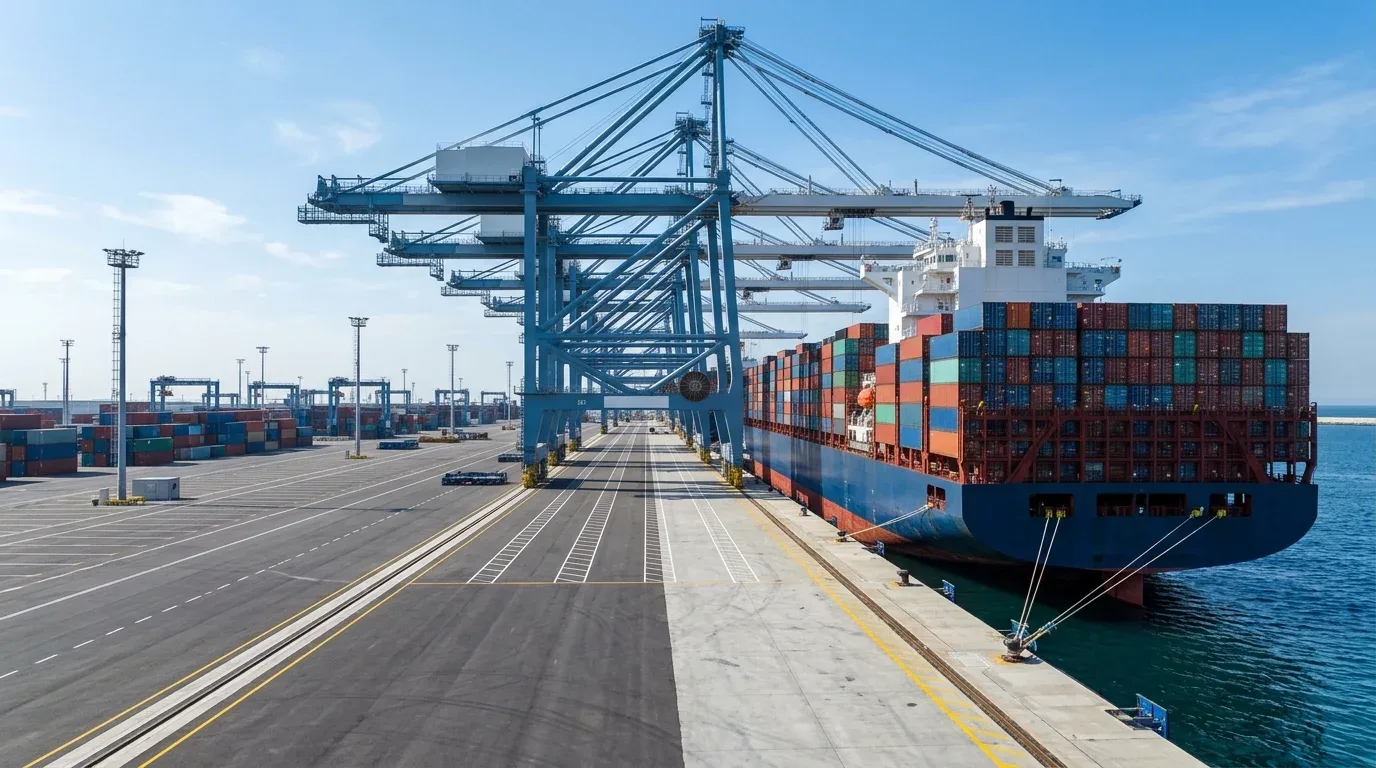
It is a rail-mounted gantry crane installed on the quay to load and unload containers from vessels. The boom extends over the ship so the trolley and spreader can move containers between the vessel and the quay.
It uses electric hoist and trolley drives to position the spreader over the ship’s cells, while the gantry travels on rails along the quay. The operator in the cab controls each movement through variable speed drives and a PLC network linking the cab, the machinery house and the sensors.
STS cranes run on rails along the quayside and move containers between the vessel and the terminal. RTG cranes run on tyres in the container yard and stack containers in the storage blocks.
It needs maintenance on power distribution, variable speed drives, PLCs, limit switches and festoon cabling. Typical work includes checking contactor wear, measuring motor insulation, testing loop impedance and retightening terminals exposed to vibration.
Salt air deposits chlorides on terminals, busbars, relay contacts and sensor boxes. These deposits speed up corrosion, create leakage paths across insulation and dry out the seals of outdoor junction boxes and panel doors.
Yes. The crane under maintenance is isolated while the other cranes and the container yard keep operating. The work is scheduled between vessel calls or in agreed windows, and the crane returns to operation with the test report.
Yes. Nualux already maintains cranes at container terminals in Portugal and Spain.
It depends on the type and number of cranes, the scope of the intervention, access at height and the length of the shutdown window. To prepare a quote, Nualux needs the crane type, the terminal, the electrical diagrams and the fault log.
A Nualux II usa cookies de estatística (Google Analytics e Microsoft Clarity) para saber que páginas são lidas. Só são ativados se aceitar. Política de privacidade